Introduction
By February 2026, SearchGPT has officially transitioned from a viral experiment to a cornerstone of digital discovery. For SEO professionals, the goal has shifted: it’s no longer just about ranking #1 on a screen; it’s about becoming the trusted source that OpenAI’s models synthesize into a final answer.
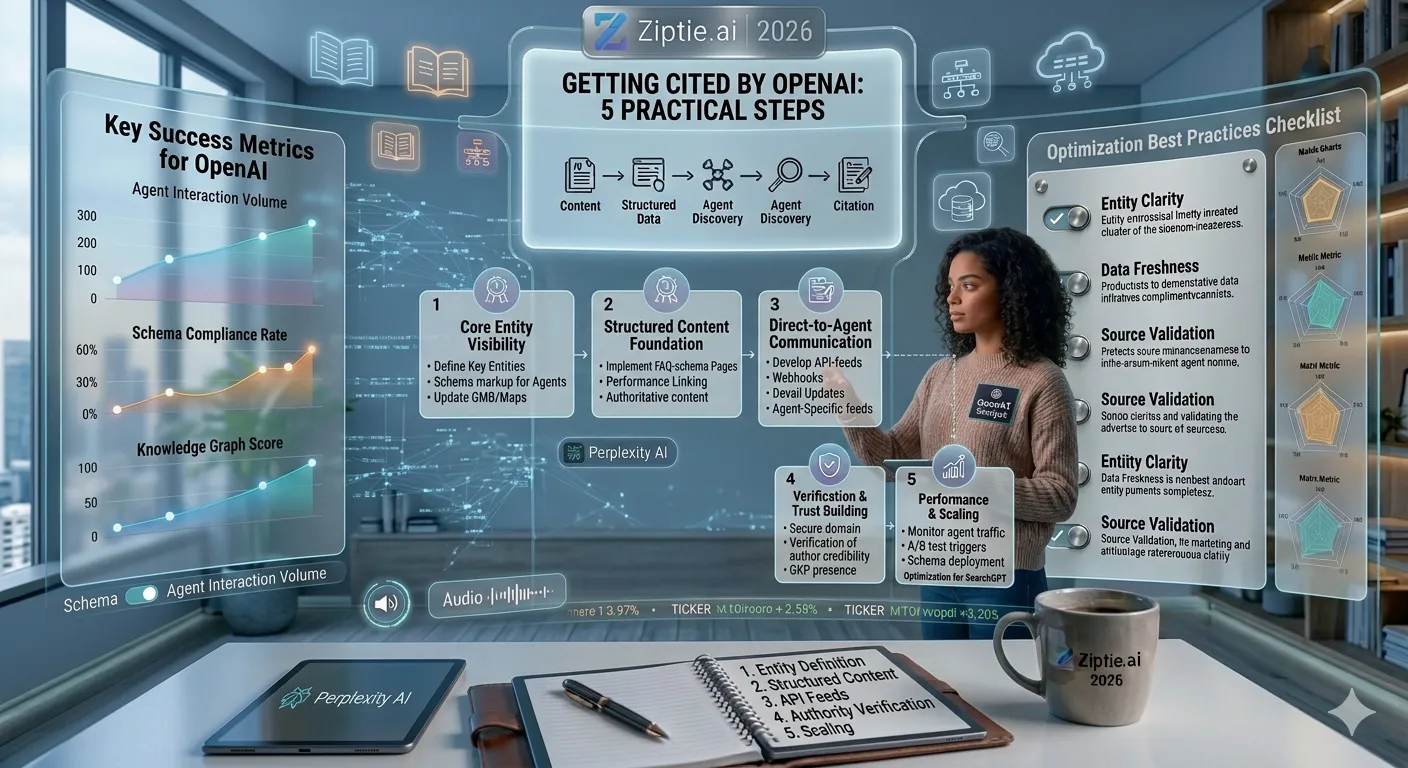
If your site isn’t being cited by OAI-SearchBot, you are missing out on a massive, high-intent traffic stream. This guide provides a 5-step blueprint to evolve your strategy from traditional SEO to GEO (Generative Engine Optimization).
Step 1: The “Answer Capsule” (Inverted Pyramid 2.0)
The Method: Place a 40-60 word “definition box” or summary immediately following your H2 headers.
- Why it works in 2026: OpenAI’s models are designed for efficiency. When SearchGPT crawls your page, it looks for “extractable units.” By providing a concise, standalone summary, you make it easy for the AI to “copy-paste” your expertise into its response.
- Pro Tip: Start your capsule with a direct statement: “The most effective way to optimize for SearchGPT in 2026 is…”
Step 2: Fact Density & The “Data Anchor” Principle
The Method: Replace qualitative adjectives (e.g., “fast growth”) with quantitative data (e.g., “a 22.4% MoM increase”).
- Why it works: In 2026, AI “hallucinations” are the enemy. SearchGPT prioritizes verifiable anchors. Specific percentages and dollar amounts signal to the AI that your content is grounded in fact.
- GEO-Optimized Example: “According to 2026 industry benchmarks, 78% of mid-sized firms have integrated AI into their daily workflows.” (Compare this to the vague: “Many businesses use AI now.”)
Step 3: Schema 2.0 (Structured Data for Agents)
The Method: Go beyond basic metadata. Implement deep JSON-LD Schema for FAQ Pages, How-To guides, and specific Product attributes.
- Technical Detail: SearchGPT uses structured data as a “translation layer.” It trusts your Schema more than your prose. In 2026, ensuring your JSON-LD is logically mapped is like giving OAI-SearchBot a VIP map of your website.
- Note: This is a core part of the AISO Revolution we analyzed recently.
Step 4: Cultivating “Consensus Authority”
The Method: Ensure your core claims are discussed on “high-trust” hubs like Reddit, Quora, or niche Discord/GitHub repositories.
- Why it works: SearchGPT uses a Consensus Mechanism—it cross-references multiple sources. If your content aligns with the “consensus” found on community-driven platforms, your citation probability skyrockets. This builds the “Trust” pillar of E-E-A-T that we discussed in our AI Search Monitoring Guide.
Step 5: Freshness & The “2026 Timestamp”
The Method: Perform “Micro-Updates” every 30 days. Add a “Last Fact-Checked on [Date]” line and update stats to reflect current 2026 trends.
- Why it works: SearchGPT is built for now. Unlike Google, which might favor an old article with massive backlinks, SearchGPT favors a 2026 article with real-time accuracy. Following the 30% Rule allows you to automate these micro-updates while keeping your expert insights fresh.
Conclusion: From SEO to GEO
The transition from Search Engine Optimization to Generative Engine Optimization (GEO) is the most significant shift in digital marketing history. By optimizing for citations, fact density, and AI readability, you aren’t just chasing an algorithm—you are building the knowledge base of the future.
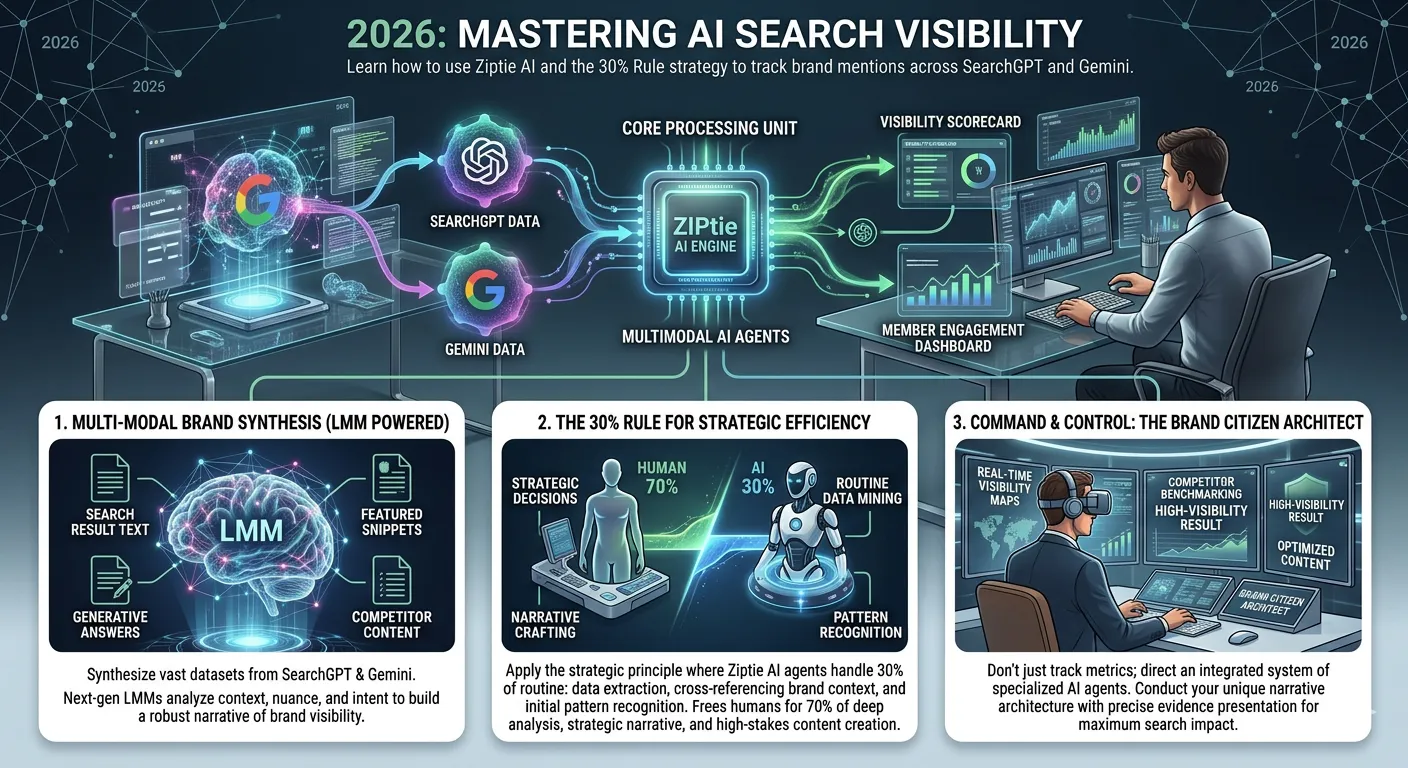
Final Thought: If you want to see if your current strategy is working, use tools like Ziptie.ai to track your citation gaps in real-time.