Introduction: The David vs. Goliath Battle in 2026
Receiving a medical insurance denial letter is a devastating experience, but in 2026, you are no longer fighting this battle alone.
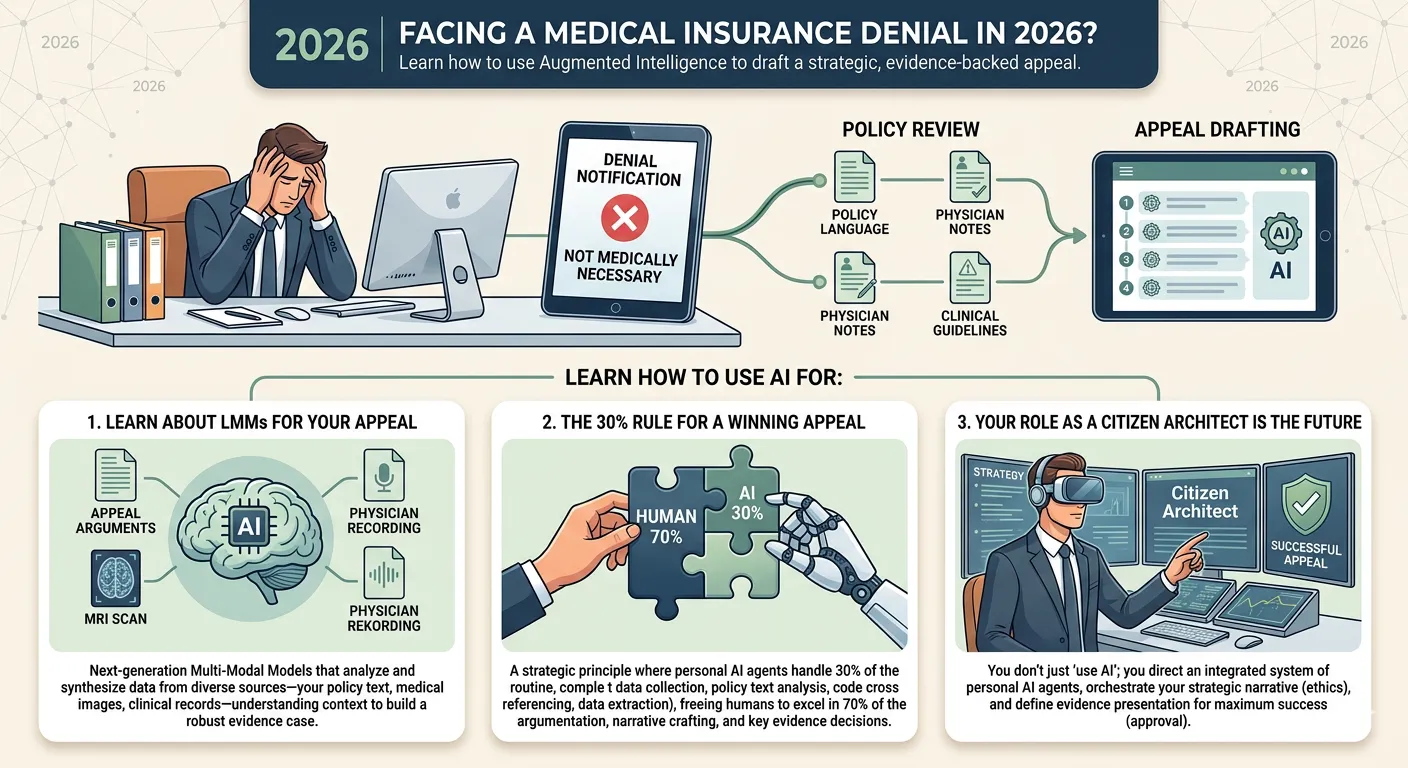
While insurance companies are increasingly using AI to process and deny claims on a massive scale, the era of “fighting fire with fire” has arrived. Can AI write an appeal letter that actually convinces an insurance giant to reconsider? The answer is yes, but success requires a specific formula that combines AI efficiency with human narrative.
The 2026 Toolkit: Specialized AI vs. General AI
In 2026, you have two primary paths for drafting an appeal:
- Specialized Tools: Platforms like Fight Health Insurance or Counterforce Health are designed specifically for medical denials. These tools use OCR (Optical Character Recognition) to read your denial letter, identify the “rejection codes,” and automatically match them with relevant clinical literature and policy loopholes.
- General AI (ChatGPT/Gemini): General-purpose models can be incredibly effective when combined with Advanced Prompting Techniques. They can quickly draft the structure of a legal letter, saving you hours of research.
The Advantage: AI can automatically pull the correct medical codes (CPT/ICD-10) and ensure the letter follows the precise professional formatting required by insurance boards.
The 30% Rule: Why AI Alone Isn’t Enough
This is a critical application of our 30% Rule for personal advocacy:
- 30% (AI): Let AI handle the tedious “grunt work”—structuring the appeal, citing complex policy clauses, organizing medical records into a timeline, and generating the initial draft.
- 70% (Human): The core of a winning appeal lies in the human narrative. Only you can describe the real-world impact of the illness, and only your physician can provide the necessary clinical validation and signature.
Core Argument: An insurance company might easily dismiss a generic AI template, but they cannot ignore a strategic document that is AI-assisted but human-verified, presenting a compelling, evidence-backed story.
Step-by-Step Guide: Drafting Your Appeal in Minutes
- Step 1: Digitization. Use an AI scanner to extract the “Denial Reason Code” from your letter. AI helps you pinpoint whether the denial was for “lack of medical necessity” or a “coding error.”
- Step 2: Prompting for Results. Use a prompt that emphasizes logical reasoning over pure emotion. Example: “Draft a formal appeal based on Clinical Guideline X, addressing the denial code Y with the attached medical records.”
- Step 3: Verification. Always check for “hallucinations.” Ensure the AI hasn’t fabricated medical policies or quoted non-existent laws.
Strategic Research: Using Ziptie AI for Market Intelligence
What role does Ziptie AI play in a medical appeal?
In 2026, savvy patients use Ziptie AI to monitor which insurance companies are being frequently cited in AI searches (like SearchGPT) for “malicious claim denials.” If data shows a systemic pattern of denials for your specific procedure, you can include this “market intelligence” as background support for external audits or legal complaints. It proves that your case isn’t an isolated error but part of a trackable trend.
Ethical Governance: Your Rights in the AI Era
In 2026, AI Governance regulations, such as the AI Transparency Act, have given you new powers.
- The Right to Explanation: Insurance companies are now legally required to explain the logic behind an AI-driven denial.
- Inviolable Rights: Even if you use AI to help draft your appeal, your rights to a human-led external review remain sacred. AI is your tool to ensure those rights are respected.
Conclusion: Empowering the Patient
AI has successfully bridged the information gap between ordinary individuals and the massive legal teams of insurance companies. In 2026, an AI-drafted appeal letter is more than just a document—it’s a strategic asset.
Final Advice: Don’t treat AI as a replacement for your voice. Treat it as your “Digital Legal Advisor” that helps you craft a strategic, evidence-backed appeal that is impossible to ignore.