

By 2026, the global energy transition has encountered a fundamental physical constraint. While lithium-ion batteries were the heroes of the initial renewable push, they are hitting an economic and technical limit: the “4-Hour Wall.” To sustain a civilization on wind and solar, we are shifting toward a “Star-Core-Loop” model—one where energy is stored for weeks and materials are never truly “used up.”
2. Breaking the 4-Hour Wall: The Rise of LDES
In 2026, short-duration storage (4-6 hours) is no longer sufficient to mitigate “Dunkelflaute”—extended periods of low wind and solar output.
2.1 The Seasonal Variability Crisis
As renewable penetration in regions like the EU and California surpasses 70%, the grid requires “Firm Power” that can last through multi-day storms or seasonal lulls. Long-Duration Energy Storage (LDES) fills this gap, providing discharge durations from 10 hours to 100+ hours.
2.2 The New Titans: Iron-Air and Flow Batteries
- Iron-Air Technology: Companies like Form Energy have achieved a 2026 milestone by scaling iron-air batteries to a cost point of $20/kWh. By using the simple chemistry of “rusting” and “un-rusting” iron, these systems provide 100-hour storage at a fraction of the cost of lithium.
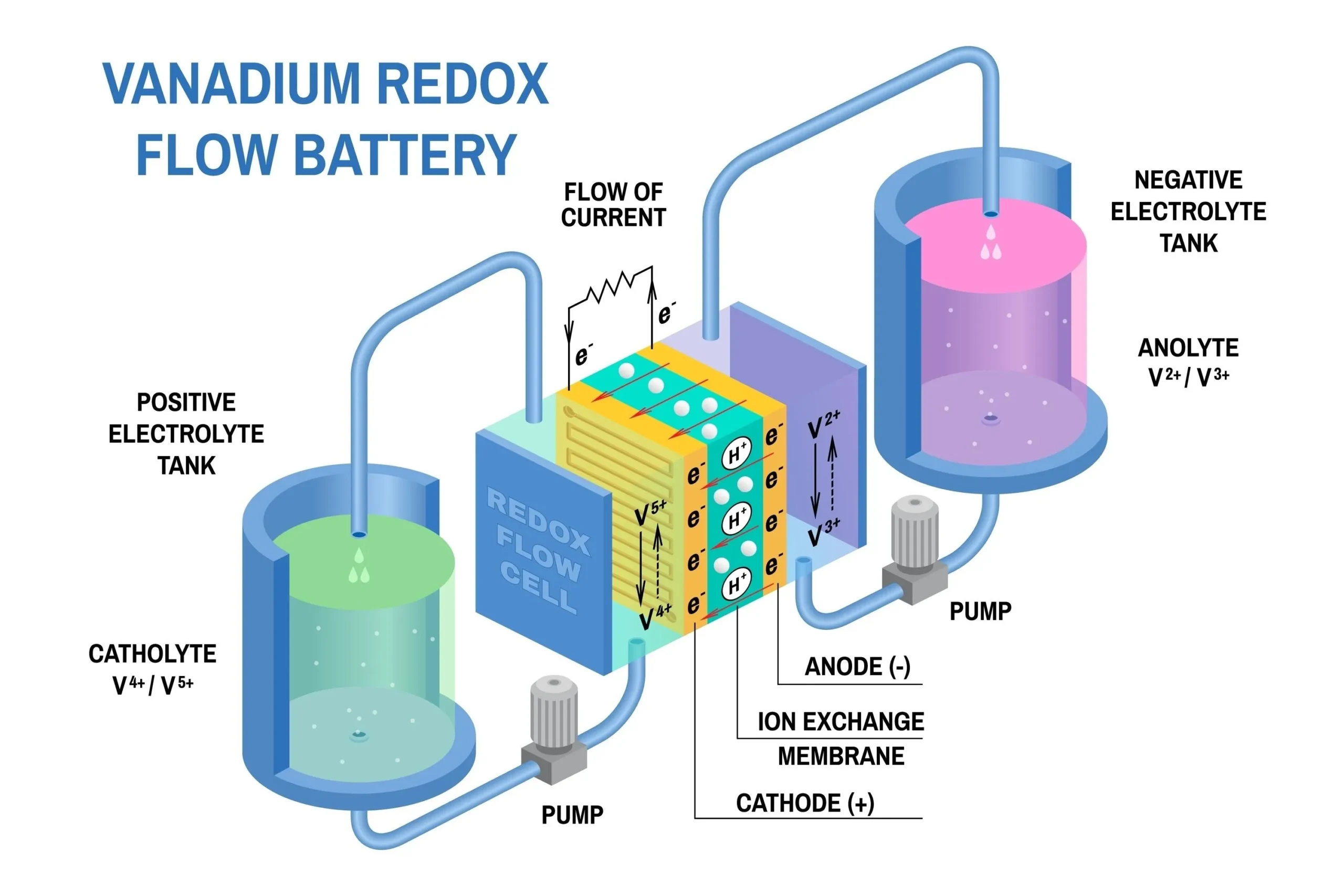
- Vanadium Flow Batteries: These systems have become the 2026 standard for utility-scale stability. With a 25-year lifespan and zero degradation over 10,000+ cycles, they serve as the “industrial lungs” of the new grid.
3. The Circular Imperative: Sustainability Meets Material Security
2026 is the year the industry realized that we cannot mine our way to Net-Zero. Material security has become a matter of national sovereignty.
3.1 The $100 Billion “Urban Mining” Industry
As the first generation of mass-market EVs from the early 2010s reaches end-of-life, 2026 marks the “Scrappage Peak.”
- Recovery Rates: Advanced hydrometallurgical recycling now recovers 98% of lithium, cobalt, and nickel.
- Energy Savings: This process consumes 50% less energy than primary ore mining, making “recycled molecules” cheaper than “virgin molecules.”
3.2 Digital Product Passports (DPP)
Under the 2026 EU Battery Regulation mandates, every battery over 2kWh must carry a blockchain-verified Digital Product Passport.
- Traceability: This passport tracks the carbon footprint, ethical sourcing, and recycled content of every cell.
- Secondary Market: This data has created a robust “Second-Life” market where EV batteries are repurposed for grid storage before being finally recycled.
4. Strategic Autonomy: Decoupling from the Mine
To reduce dependence on volatile global supply chains, the US and EU are prioritizing Secondary Raw Materials (SRMs).
4.1 Sodium-Ion and Iron-Based Chemistries
By 2026, the shift toward Sodium-Ion (which uses abundant sea salt) and iron-based chemistries has decoupled energy storage from the lithium/cobalt price spikes of the early 2020s. These materials are abundant, geopolitically neutral, and easier to recycle.
4.2 Localized Recycling Hubs
In 2026, “Circular Industrial Parks” are the new norm. Recycling facilities are co-located with Gigafactories and Virtual Power Plants (VPPs), creating a localized loop where a battery can be decommissioned, recycled, and re-manufactured into a new cell within a 50-mile radius.
5. Carbon Removal 2.0: The Synergy Model
The 2026 carbon market has pivoted from “avoidance” to “permanent removal.”
5.1 DACCS and LDES Synergy
Direct Air Carbon Capture and Storage (DACCS) is no longer a standalone cost center. In 2026, massive “Mammoth-class” DAC facilities are powered by the waste heat generated from LDES discharge cycles.
- Efficiency: This synergy improves the thermal efficiency of the entire hub by 15%.
- Carbon-Negative Materials: Captured CO2 is increasingly used as a feedstock for Carbon-Neutral Synthetic Fuels and CO2-infused concrete for sustainable construction.
6. Market Dynamics: The 2030 Roadmap
The LDES Council and the International Energy Agency (IEA) have aligned on the 2030 goal: the world needs 1.5–2.5 TW of long-duration capacity.
6.1 The Shift to Hard Assets
Private equity has completed its pivot. In 2026, the $100 billion of “Climate Tech” capital is no longer flowing into carbon-accounting software; it is being deployed into Hard-Asset Infrastructure—the physical tanks, caverns, and recycling smelters that hold the system together.
6.2 Global Geopolitics of Storage
While China leads in the mass production of vanadium electrolyte, the Atlantic Energy Axis (US & EU) leads in the software integration and modular design of LDES systems, creating a competitive but essential global trade balance.
7. Conclusion: Closing the Loop
In 2026, the energy transition has evolved into its final, sustainable form. We are no longer just producing clean energy; we are managing the molecules of human progress in a closed, infinite loop.
Final Thought: By 2026, the “Take-Make-Waste” economy is dead. We have replaced it with a system where energy is sourced from the stars and core, and every material used to capture it is returned to the cycle. We have finally built a civilization that mimics the resilience of the Earth itself.