Introduction: Defying Gravity with Pixels
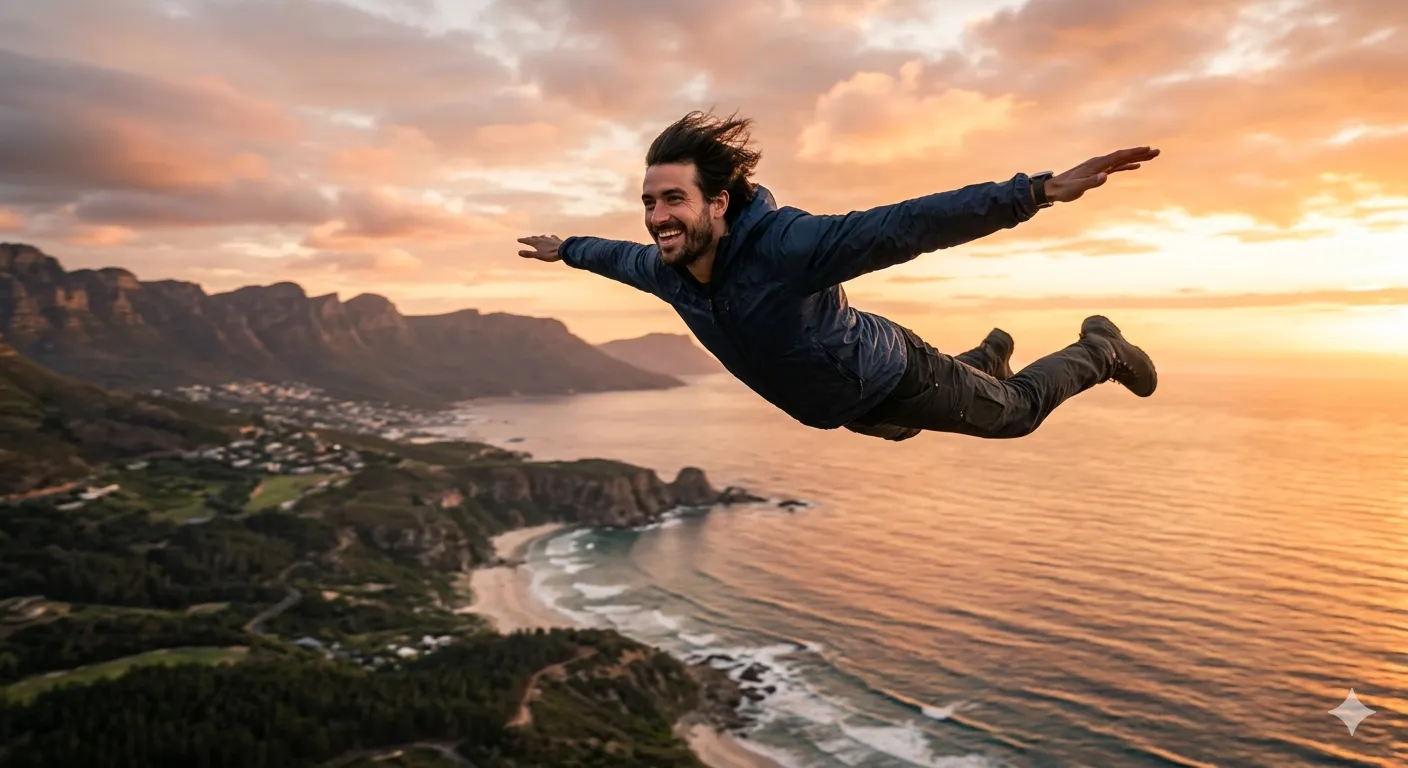
Generating an image of a man flying is easy, but creating a flying man that looks like he should be flying is much harder.
In 2026, we’ve all seen those failed AI attempts: plastic-looking mannequins hovering awkwardly in the air or figures with contorted, impossible limbs. The “Uncanny Valley” in AI graphics often stems from a lack of physical realism. Our core objective today is decoding “Aerodynamic Prompting”—the 2026 technique for generating a flying man ai photo that doesn’t just look real but feels physically plausible.
The Physics of the Prompt: Why Realism is Hard
By 2026, our have evolved to understand more than just pixels; they understand basic physics engines. However, they still struggle with the “invisible forces.”
AI often fails in flight imagery because it understands the action of flying but ignores the interaction between air resistance, gravity, and materials. Without specific instructions, AI forgets the wind’s drag on hair or the specific muscle tension required for stabilization. To get a perfect man flying in the air ai result, we must feed the model the logic of the atmosphere.
Text-to-Image in 2026: The “Aerodynamic” Prompt
In 2026, prompt engineering has moved from descriptive adjectives to structural physics. Here is how to construct a high-performance prompt:
- Action: Instead of “man flying,” use “man mid-flight, horizontal stabilization, streamlined body posture.”
- Physics: Add “clothing ripple effect caused by high-velocity wind, hair trailing in drag, realistic cloth tension.”
- Environment: Use “forced perspective, volumetric fog for depth, and cinematic sunlight flare through limbs” to ground the subject in the scene.
The 30% Rule: Curating the Flight
To achieve a masterpiece, we apply the :
- 30% (AI): Let the AI handle the complex “heavy lifting”—calculating the light bounce, the anatomical bone structure, and the pixel-perfect rendering of the sky.
- 70% (Human): As the architect, you define the intent. Are we creating a superhero, a surrealist dreamscape, or a hyper-realistic action shot? You oversee the composition and the final color grading to ensure the image tells a story rather than just displaying a prompt.
Technical Pillars for Realism
- Lighting Sync: The most common mistake is a lighting mismatch between the subject and the background. In 2026, we use “Environment Maps” in our prompts to ensure the sun hitting the flying man’s back matches the sky’s luminosity.
- Texture Details: Advanced tools, similar to the multi-modal logic found in , can now identify how textures should behave under stress—such as the way a leather jacket stretches across the shoulders during a high-speed dive.
Detection and Ethics: Is It Too Real?
As our a man flying ai image results become indistinguishable from real photography, we face a new trust crisis. The ethical responsibility of creators in 2026 is higher than ever. This is why tools are no longer optional—they are essential for maintaining the integrity of digital media. When an image is “too real,” transparency about its synthetic origin becomes a pillar of professional AI governance.
Strategic Insights: Monitoring Visual Trends with Ziptie AI
Why are we seeing a surge in “Retro-futuristic Flying” imagery? By using , we can track shifting visual aesthetics in real-time. Ziptie’s data discovery reveals that users in 2026 are moving away from “Clean Sci-Fi” and toward “Gritty Realism.” Monitoring these trends allows you to stay ahead of the curve, generating content that resonates with current audience preferences before they become mainstream.
Conclusion: Your Creative Runway
The future of AI image generation isn’t about which button you press; it’s about how well you understand the physical world and translate that into language.
Final Advice: Don’t just be a “prompt copycat.” Be the Aerodynamic Architect of your visuals. The true power of AI lies in your ability to curate the invisible forces—gravity, wind, and light—that shape a truly realistic narrative.
Ready to take off? Try using our “Physics-First” prompt template today and share your most realistic flight images in the comments below!